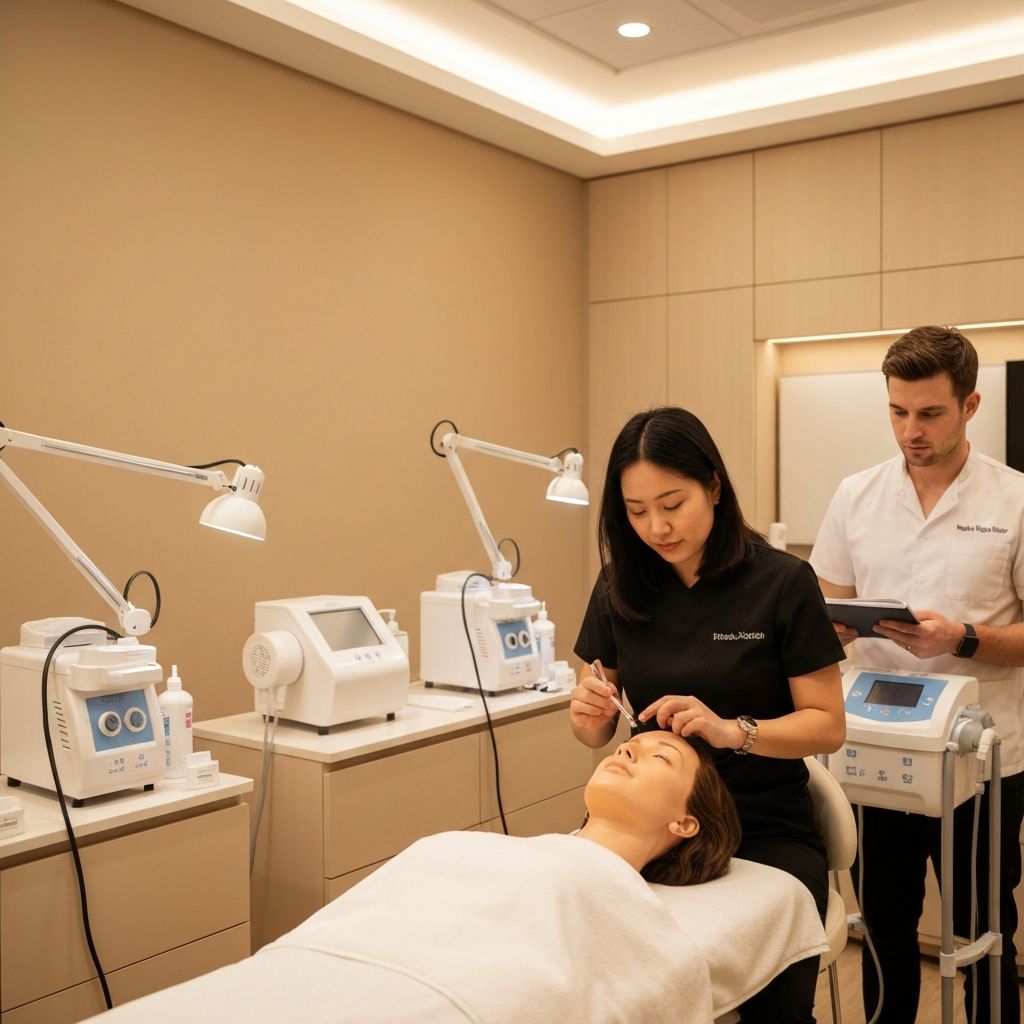
Filler Indications and Contraindications: A Practitioner's Guide
Knowing which patients are good candidates for dermal filler treatment—and which are not—is the foundation of safe filler practice. This guide covers clinical indications, absolute and relative contraindications, and patient screening essentials.

Dermal filler injections are among the most commonly performed aesthetic procedures globally, and their safety record is excellent when performed by trained practitioners on appropriately selected patients. The critical variable in outcomes—both safety and aesthetics—is patient selection. Identifying contraindications, managing relative risk factors, and setting realistic expectations before treatment begins prevents the vast majority of filler complications and dissatisfied patients. At Ziba Aesthetics Training Institute, patient selection and contraindication screening are foundational components of filler training, emphasized as strongly as injection technique itself. This guide provides a comprehensive reference for filler practitioners on clinical indications, screening questions, and contraindications that must shape every consultation.
Clinical Indications for Dermal Filler Treatment
Dermal fillers are indicated for the correction of volume deficiency, tissue descent, and static lines that are not addressed by neurotoxin treatment alone. The ideal filler candidate presents with specific, identifiable structural or volumetric deficits that can be meaningfully improved with filler placement. Understanding the distinction between filler-appropriate concerns and those better addressed by other modalities is a key consultation skill.
Volume Loss and Structural Support Indications
Mid-face volume loss resulting in flattened cheeks, deepening of the nasolabial folds, and heaviness of the lower face is the most compelling indication for filler, as restoring structural support lifts and rejuvenates the entire lower face. Temporal hollowing, tear trough deepening, and jawline definition loss are further structural indications that respond well to filler placement in the appropriate tissue planes.
Superficial Line and Contour Indications
Static perioral lines, lip border definition loss, and vertical lip lines are surface-level indications for superficial filler placement. Lip augmentation—both for volume and border definition—is one of the most requested filler applications and requires specific soft product selection and precise mapping technique. Chin projection and reshaping are contouring indications that respond well to deep filler placement in the pre-periosteal layer.
Absolute Contraindications to Filler Treatment
Absolute contraindications to filler treatment represent clinical situations where the risk of serious harm is high enough that no degree of patient desire or practitioner skill changes the risk calculus. These must be applied consistently and without exception in a professionally conducted filler practice.
Known Allergy to Filler Components
Known hypersensitivity to hyaluronic acid or to any component of the specific filler product is an absolute contraindication. While true HA allergy is extremely rare (HA is endogenous to human tissue), allergy to crosslinking agents, lidocaine (present in many modern HA products), or other excipients is possible. A thorough allergy history must be obtained before every treatment.
Active Infection in the Treatment Area
Active bacterial infection (including active acne lesions, cellulitis, or impetigo), viral infection (including active cold sores from herpes simplex in perioral treatment areas), and fungal infection in the planned treatment zone absolutely contraindicate filler injection. Introducing foreign material through infected tissue dramatically increases the risk of biofilm formation, abscess, and chronic filler infection—one of the most challenging complications in aesthetic medicine.
Relative Contraindications and Risk Management
Relative contraindications require clinical judgment and patient-specific risk-benefit assessment rather than automatic treatment refusal. For many relative contraindications, appropriate management strategies exist that allow treatment to proceed safely with modified technique, timing, or precautions.
Autoimmune Conditions and Immunosuppression
Patients with autoimmune conditions or those on immunosuppressive therapy have an altered immune environment that may affect their response to filler placement, increase the risk of delayed hypersensitivity reactions, and impair their ability to resolve filler-related complications. These patients can be treated in many circumstances, but require heightened vigilance, conservative product selection, and thorough pre-treatment discussion of the modified risk profile.
Anticoagulant Medications and Bleeding Tendency
Patients on anticoagulant medications—including warfarin, DOACs, aspirin, and NSAIDs—are at increased risk of bruising, haematoma formation, and potentially intravascular complications during filler injection. Practitioners should discuss bleeding risk candidly during consultation, advise on which supplements can safely be paused before treatment, and modify technique (using cannula where appropriate) to minimize vascular trauma.
Screening Protocol for Filler Consultations
A structured consultation and intake process is the most reliable method for identifying contraindications and relative risk factors before filler treatment. Ad hoc questioning or brief verbal reviews are insufficient for the thoroughness required in medical aesthetic practice. The screening protocol should be documented and consistently applied to every new patient and reviewed at every subsequent visit.
Key Intake Form Elements for Filler Patients
The filler patient intake form should capture: full medication list including supplements and herbal products, current and recent infections, known allergies, previous aesthetic treatment history and any reactions, autoimmune or immune system conditions, pregnancy and breastfeeding status, history of cold sores (for perioral treatments), current skin conditions in treatment areas, and desired treatment outcomes and expectations.
The Herpes Prophylaxis Protocol for Perioral Filler
Patients with a history of labial herpes simplex (cold sores) are at risk of herpetic reactivation triggered by perioral filler injection. The standard of care is to prescribe antiviral prophylaxis (acyclovir or valacyclovir) beginning 24–48 hours before treatment and continuing for 5–7 days post-procedure. Practitioners eligible to prescribe should routinely ask about cold sore history for all lip and perioral treatments.
Ziba Aesthetics Training Institute
Ziba Aesthetics Training Institute at 7191 Yonge St Unit 701, Markham, ON provides comprehensive filler training including patient selection, consultation, and contraindication management for qualified medical professionals. Call (416) 318-7447 or visit aesthetictraining.ca.
Frequently Asked Questions
More Mezogel Booster Articles
Continue learning about Mezogel Booster treatments and training
- Mezogel Booster Treatment in Toronto: Complete Guide
8 min read
- Mezogel Booster Training and Certification in Ontario
7 min read
- Mezogel vs Profhilo: Comparing Skin Booster Treatments
9 min read
- 10 Benefits of Mezogel Booster for Skin Rejuvenation
10 min read
- How to Perform Mezogel Booster: Injection Techniques Guide
11 min read
- Mezogel Booster Side Effects and Safety: Complete Guide
10 min read
More Laser Training Articles
Continue learning about laser training, certification, and aesthetic careers
- Laser Technician Certification in Ontario: Requirements and Training
9 min read
- Advanced Laser Training for Experienced Technicians
7 min read
- Laser Training in Thornhill: Complete Certification Guide
12 min read
- Laser Hair Removal Training in Thornhill: Get Certified
11 min read
- Laser Skin Rejuvenation Training in Thornhill
11 min read
- Best Laser Training Center in Thornhill and Toronto
11 min read
Related Programs
External Resources
- Journal of Plastic and Reconstructive Surgery – Filler Complication Prevention
Evidence-based recommendations for filler complication prevention including contraindication screening and patient selection criteria.
- Health Canada – Dermal Filler Safety Information for Practitioners
Health Canada guidance on the safe use of licensed dermal filler products in aesthetic practice including contraindication awareness.