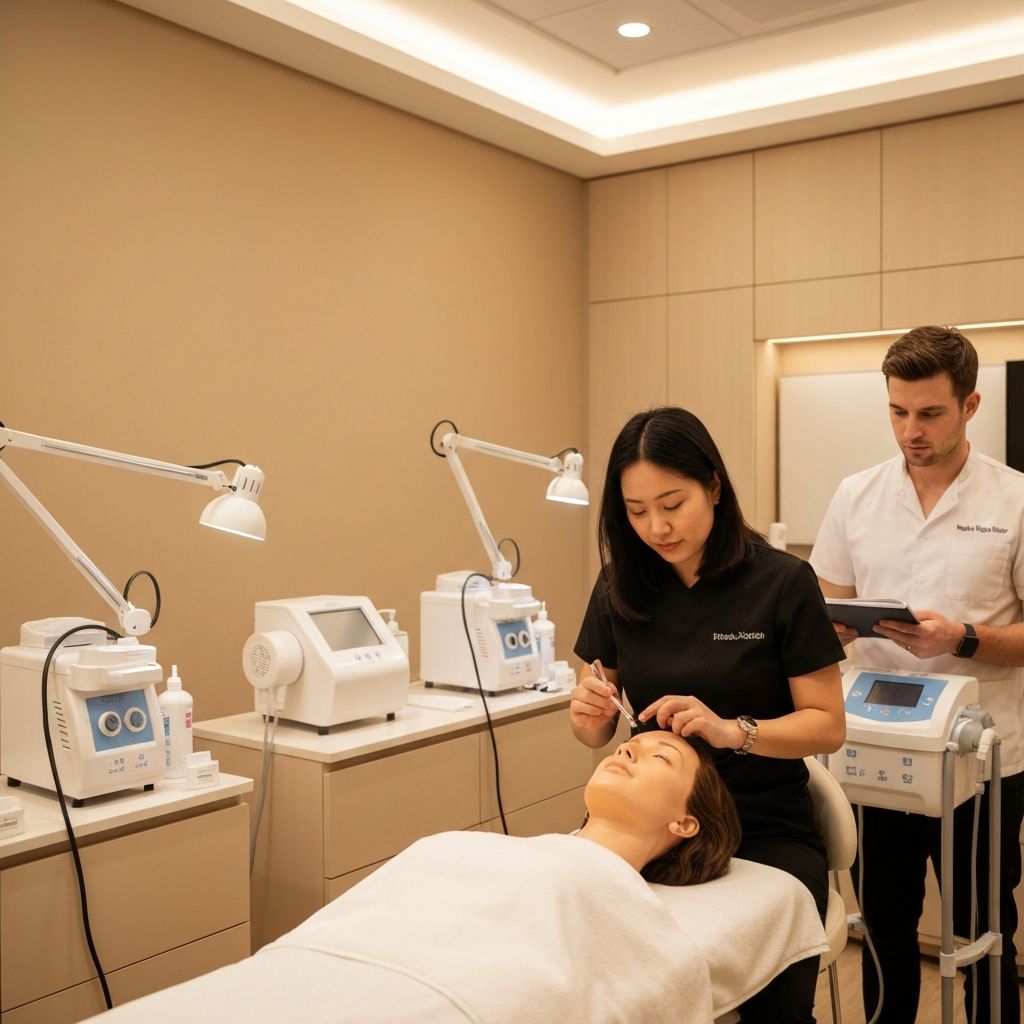
Botox for Facial Aging: Upper Face Treatment Guide
The upper face is where dynamic wrinkles most commonly develop and where Botox delivers its most reliable, impactful results. This guide covers the anatomy, technique, and expected outcomes of upper face neuromodulator treatment.

The upper face—encompassing the forehead, glabella, and periorbital area—is where dynamic wrinkles typically appear earliest and where patients first begin seeking neuromodulator treatment. These wrinkles form because repeated muscle contractions fold the overlying skin over years, creating lines that eventually remain visible even at rest. Botox and other neuromodulators interrupt this process by temporarily reducing muscle contraction, allowing existing lines to soften and new line formation to slow. For practitioners, the upper face represents the most commonly treated anatomical zone and one where refined injection technique, precise dosing, and thorough patient assessment combine to produce consistently excellent outcomes. This guide explores the anatomy, treatment approach, and expected results for each of the three standard upper face treatment areas.
The Forehead: Treating Horizontal Lines Without Sacrificing Brow Position
The horizontal lines of the forehead are caused by contraction of the frontalis muscle—the sole elevator of the brow—as it counteracts the downward pull of the brow depressor complex. Botox treatment of the frontalis requires careful balancing: enough relaxation to reduce the lines visibly, but not so much that brow position drops and creates a heavy, tired appearance. This balance is one of the most nuanced challenges in upper face Botox practice.
Assessment Before Forehead Treatment
Pre-treatment assessment of the forehead includes measuring brow height in full repose and in animation, identifying compensatory frontalis activity (patients who constantly raise their brows to counteract ptosis or low brow position), and assessing the degree of skin laxity that will affect how lines respond to muscle relaxation. Patients with low brow positions or active brow compensation require conservative forehead dosing to avoid brow ptosis.
Injection Technique and Points
Standard forehead injection involves 4–8 injection points distributed evenly across the upper frontalis, typically 2–3 cm above the orbital rim. Placing injections too inferiorly—below 2 cm from the brow—increases brow ptosis risk significantly. The medial forehead is typically spared or minimally treated to preserve the medial brow lift that prevents a heavy inner brow. Total doses typically range from 8–20 units depending on gender, muscle mass, and the degree of relaxation desired.
The Glabella: Treating the '11 Lines' and Frown Furrows
The glabellar complex—formed by the corrugator supercilii and procerus muscles—produces the vertical frown lines between the brows that many patients find most bothersome. This area is often the first treated with Botox, and the results can be dramatically softening and rejuvenating. Glabellar treatment also improves mood perception: patients treated in this area are frequently perceived as looking less angry, stressed, and tired by others.
The Anatomy of the Glabellar Complex
The corrugator supercilii arises from the superomedial orbital rim and inserts into the skin of the medial brow, drawing the brows medially and downward to produce the vertical glabellar furrows. The procerus arises from the nasal bone and inserts into the skin between the brows, producing horizontal nasal root creasing and contributing to the overall frowning complex. Understanding these distinct actions guides injection point placement for optimal relaxation.
Standard Glabella Injection Protocol
The standard glabellar treatment involves 5 injection points: one central procerus point and two pairs of corrugator points placed along the muscle belly lateral to the midline. Total doses typically range from 15–25 units in women and 20–30+ units in men with heavy corrugator muscles. Injections must be placed superiorly enough to the orbital rim to minimize ptosis risk—a minimum safe distance of 1 cm above the bony orbital rim is generally recommended.
Crow's Feet: Treating Lateral Orbital Lines
The lateral orbital lines commonly called crow's feet are produced by contraction of the orbicularis oculi muscle when squinting or smiling. They are among the earliest dynamic wrinkles to appear and one of the most commonly requested treatment areas. Crow's feet treatment is technically relatively straightforward but requires awareness of the anatomy to avoid affecting the lower eyelid or cheek.
Injection Points and Technique for Crow's Feet
Crow's feet injections are typically placed at 2–4 points along the lateral orbital margin, starting from just beyond the lateral canthus and spreading superolaterally and inferolaterally. Injections are placed very superficially—intradermally or just below the dermis—to minimize diffusion depth and reduce the risk of affecting the zygomaticus major or lower eyelid. Each injection point receives 2–4 units, with total doses of 8–15 units per side.
Managing Patient Expectations for Crow's Feet
Patients should understand that crow's feet Botox reduces the depth and severity of the lines during animation but may not eliminate very deep, static lines that are present at rest. Static lines that persist after Botox treatment may benefit from additional modalities—such as superficial filler, laser, or microneedling—to address the dermal component of the line. Setting these expectations before treatment prevents disappointment.
Combining Upper Face Areas: The Full Upper Face Treatment
Treating all three upper face areas together—forehead, glabella, and crow's feet—in a single session produces the most comprehensive and harmonious rejuvenation results. Treating these areas in combination also allows practitioners to balance the forces of each muscle group thoughtfully, avoiding the brow asymmetry or unnaturally relaxed appearance that can result from treating areas in isolation.
Dosing Strategy for Combined Treatment
When treating all three upper face areas together, the total dose typically ranges from 40 to 70 units depending on patient anatomy and gender. Practitioners must consider how the relaxation of each muscle group affects the others: forehead treatment affects brow position, which in turn influences the appearance of the glabella, and crow's feet treatment affects the lateral brow position. A holistic approach to dosing produces more aesthetically balanced results than treating each area in isolation.
The Natural-Looking Result: Preventing the Frozen Appearance
The 'frozen' or expressionless face is the outcome patients most fear and the result practitioners most want to avoid. Achieving natural-looking results requires not eliminating all movement but reducing it proportionally—leaving enough residual function to allow emotional expression while softening the exaggerated repetitive movements that create lines. Conservative dosing, accurate point placement, and the two-week review to make precise adjustments are the tools for achieving this balance.
Ziba Aesthetics Training Institute
Ziba Aesthetics Training Institute at 7191 Yonge St Unit 701, Markham, ON teaches upper face Botox technique in depth as part of our comprehensive neuromodulator training programs. Call (416) 318-7447 or visit aesthetictraining.ca.
Frequently Asked Questions
More Mezogel Booster Articles
Continue learning about Mezogel Booster treatments and training
- Mezogel Booster Treatment in Toronto: Complete Guide
8 min read
- Mezogel Booster Training and Certification in Ontario
7 min read
- Mezogel vs Profhilo: Comparing Skin Booster Treatments
9 min read
- 10 Benefits of Mezogel Booster for Skin Rejuvenation
10 min read
- How to Perform Mezogel Booster: Injection Techniques Guide
11 min read
- Mezogel Booster Side Effects and Safety: Complete Guide
10 min read
More Laser Training Articles
Continue learning about laser training, certification, and aesthetic careers
- Laser Technician Certification in Ontario: Requirements and Training
9 min read
- Advanced Laser Training for Experienced Technicians
7 min read
- Laser Training in Thornhill: Complete Certification Guide
12 min read
- Laser Hair Removal Training in Thornhill: Get Certified
11 min read
- Laser Skin Rejuvenation Training in Thornhill
11 min read
- Best Laser Training Center in Thornhill and Toronto
11 min read
Related Programs
External Resources
- Aesthetic Surgery Journal – Upper Face Botox Outcomes Review
Peer-reviewed clinical outcomes data for botulinum toxin treatment of the forehead, glabella, and crow's feet treatment areas.
- Dermatologic Surgery – Dynamic Wrinkle Treatment Evidence
Evidence-based review of botulinum toxin efficacy for dynamic wrinkle treatment across the upper face region.