Medical Directive vs Direct Order for Cosmetic Injectables
A directive and a direct order are two ways a nurse becomes authorized to perform a controlled act. Here's how they differ for cosmetic injectables in Ontario.
Short answer: A direct order is patient-specific — a prescriber assesses one client and instructs the nurse for that person. A medical directive is written in advance and can apply to any client who meets set criteria, without a prescriber ordering each time. Both are authorizing mechanisms; which is appropriate depends on the situation and current regulatory guidance.
Why authorization is needed at all
Injecting is a controlled act. An RN or RPN does not inject on their own authority; they act under an authorizing mechanism from a physician or nurse practitioner. The College of Nurses of Ontario sets out how nurses accept and act on orders and directives safely.
Direct order: one patient at a time
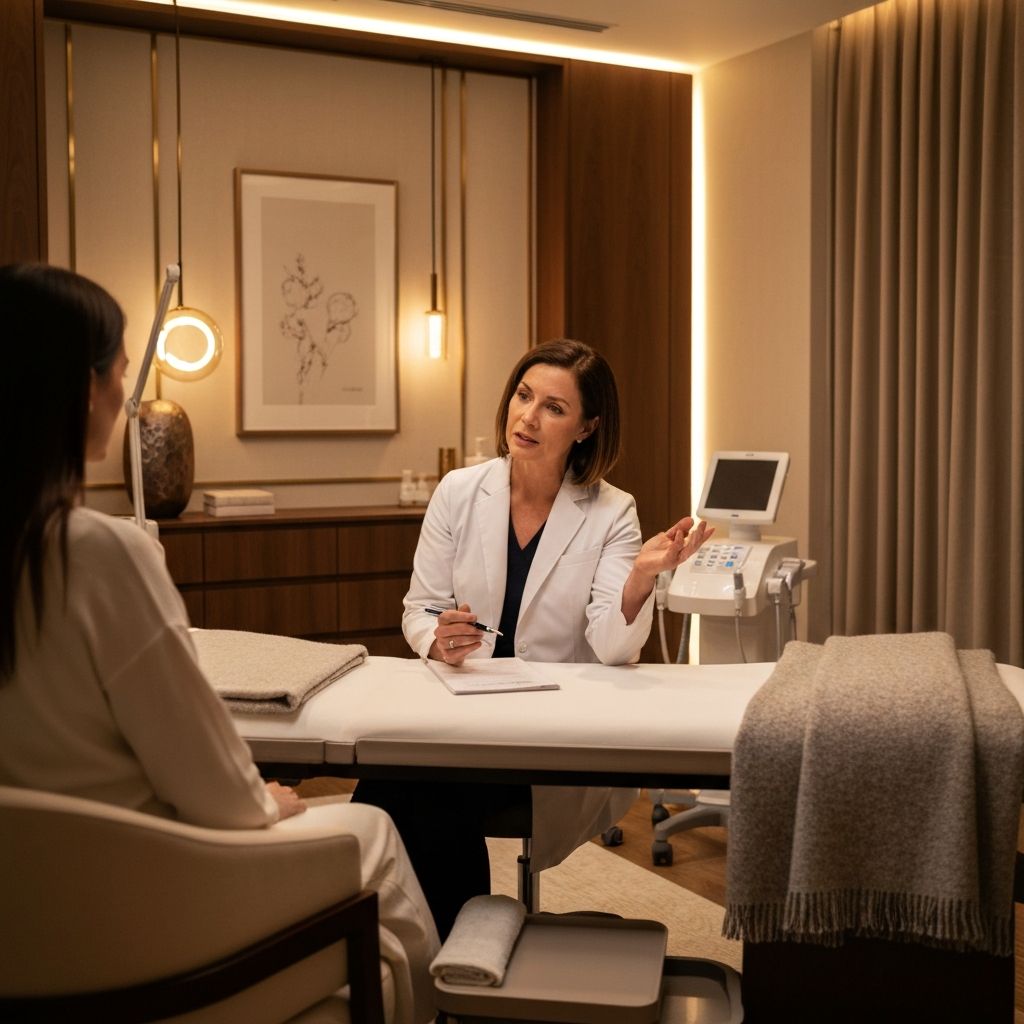
With a direct order, a prescriber assesses a specific client and gives patient-specific instructions — for example, the product, dose and sites for that individual. It is precise and tightly linked to an assessment, but it requires the prescriber's involvement for each client.
Medical directive: pre-authorized for a defined group
A medical directive is a written order, prepared in advance by an authorized prescriber, that applies to any patient who meets the criteria it sets out. It lets a nurse proceed without a new order each time, provided the directive's conditions, contraindications and documentation requirements are met. Comparison — Applies to — Direct order: One specific patient; Medical directive: Any patient meeting set criteria. Prepared — Direct order: At the time of care; Medical directive: In advance, in writing. Prescriber assessment — Direct order: Patient-specific; Medical directive: Built into criteria; may still require assessment. Best suited to — Direct order: Complex or first-time cases; Medical directive: Routine, well-defined treatments.
What's changing in Ontario
This area is actively evolving. In 2026 the CNO updated its guidance on cosmetic procedures, and there has been public discussion — reported by CBC News — about whether a medical director should sign off each time a nurse performs a cosmetic controlled act, which would narrow reliance on standing directives. Because requirements may tighten, confirm the current position with the CNO before relying on any arrangement. The Canadian Nurses Protective Society also offers legal guidance for nurses providing cosmetic services.
What this means for your training
A worked example: how a clinic might use each
Imagine a med spa offering routine glabellar (frown-line) neurotoxin treatment. For an established, healthy returning client whose treatment is well within a clearly written medical directive, a nurse might proceed under that directive, documenting that the client meets every criterion it sets. For a brand-new client with a complex history, a more cautious approach is a direct order after the prescriber assesses that specific person. The same clinic can use both mechanisms depending on the situation. The point is that directives and direct orders are tools for different levels of risk and familiarity, not interchangeable rubber stamps. A well-run clinic maps out, in advance, which treatments and client types fall under a directive and which require patient-specific orders — and trains its team to know the difference.
Documentation is what makes it defensible
Whichever mechanism applies, the nurse must document that the authorization was valid and that the client met the relevant criteria, alongside the assessment, consent and treatment record. If a treatment is ever questioned, that documentation is the evidence that care was authorized and appropriate. Sloppy records undermine even a perfectly lawful arrangement. Authorization is separate from technique. A course like Ziba's Botox & Filler program (open to medical professionals) builds injection skill; you still need a valid order or directive and a prescriber relationship to practise. If you are mapping your path from bedside nursing into aesthetics, understanding these mechanisms early saves costly missteps.
Ziba Aesthetics Training Institute
Ziba Aesthetics Training Institute is located at 7191 Yonge St, Unit 701, Markham, ON, serving the Greater Toronto Area. To learn more about the Botox & Filler program or discuss your goals, book a consultation or start your application with our admissions team.
Frequently Asked Questions
More Mezogel Booster Articles
Continue learning about Mezogel Booster treatments and training
- Mezogel Booster Treatment in Toronto: Complete Guide
8 min read
- Mezogel Booster Training and Certification in Ontario
7 min read
- Mezogel vs Profhilo: Comparing Skin Booster Treatments
9 min read
- 10 Benefits of Mezogel Booster for Skin Rejuvenation
10 min read
- How to Perform Mezogel Booster: Injection Techniques Guide
11 min read
- Mezogel Booster Side Effects and Safety: Complete Guide
10 min read
More Laser Training Articles
Continue learning about laser training, certification, and aesthetic careers
- Laser Technician Certification in Ontario: Requirements and Training
9 min read
- Advanced Laser Training for Experienced Technicians
7 min read
- Laser Training in Thornhill: Complete Certification Guide
12 min read
- Laser Hair Removal Training in Thornhill: Get Certified
11 min read
- Laser Skin Rejuvenation Training in Thornhill
11 min read
- Best Laser Training Center in Thornhill and Toronto
11 min read
Related Programs
External Resources
- Scope of Practice — practice standard, College of Nurses of Ontario
CNO practice standard on controlled acts, orders and authorizing mechanisms for nurses. Verified. Source: https://cno.org/Assets/CNO/Documents/Standard-and-Learning/Practice-Standards/49041-scope-of-practice.pdf
- How the College of Nurses of Ontario is changing its guidance on Botox and fillers — CBC News (July 2026)
Reports CNO 2026 guidance: RNs/RPNs administering cosmetic injectables must work with a prescriber (physician/NP) under a directive or direct order. Secondary source; corroborates regulator direction. Source: https://www.cbc.ca/news/canada/toronto/ontario-medical-aesthetics-changes-9.7280103
- Ask a Lawyer: Providing Cosmetic Services — Canadian Nurses Protective Society
Legal guidance for nurses on authorization, orders and liability when providing cosmetic services. Verified reference. Source: https://cnps.ca/article/ask-a-lawyer-providing-cosmetic-services/