Fitzpatrick Skin Typing Explained for Laser and Peel Practitioners
Skin typing isn't a formality — it's a safety tool. Here's a clear explainer of the Fitzpatrick scale and why it guides laser and peel decisions.
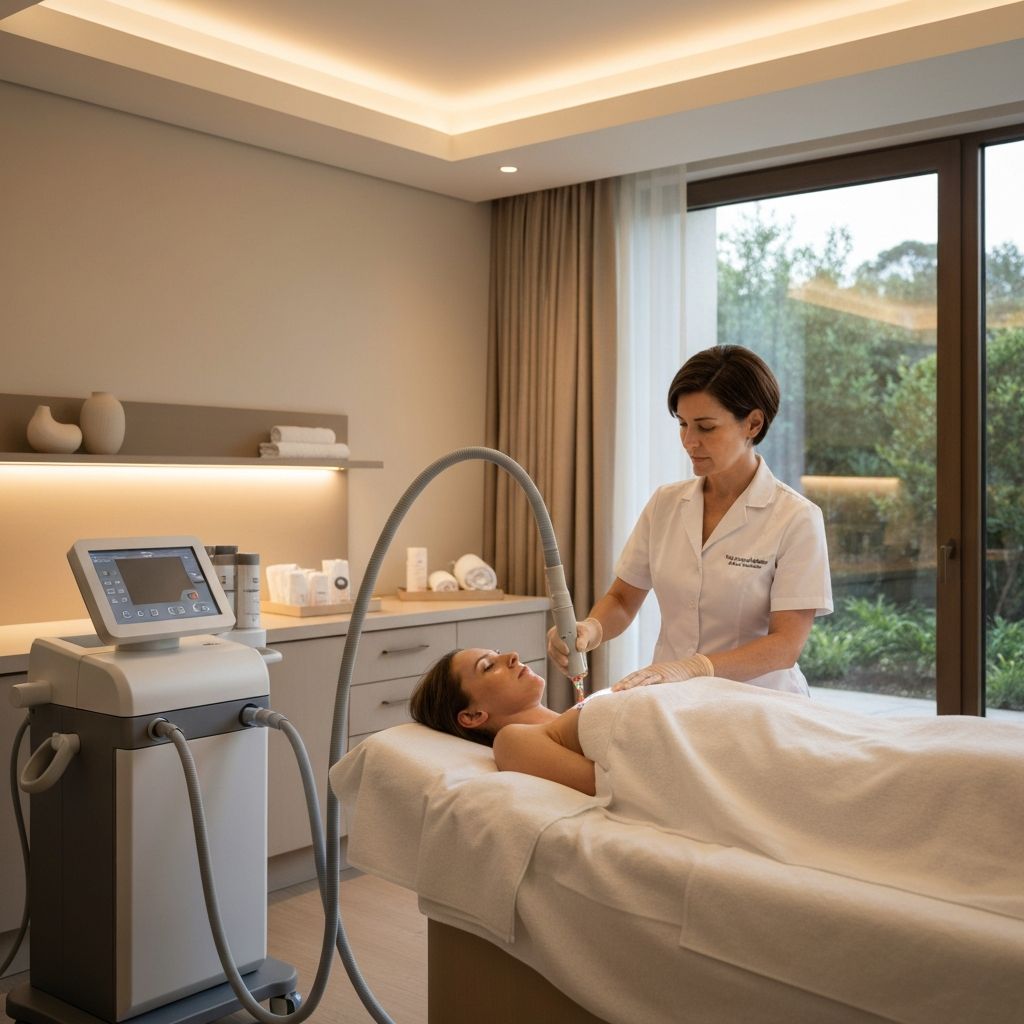
Why it matters: The Fitzpatrick scale classifies skin by how it responds to UV — from type I (very fair, always burns) to type VI (deeply pigmented, rarely burns). For lasers and peels it's a core safety tool: skin type affects the risk of burns and pigment changes and guides parameter and product selection, especially for deeper skin tones. This is an educational overview — always treat under proper training.
The six skin types
Comparison — I — General characteristics: Very fair, light eyes/hair; UV response: Always burns, never tans. II — General characteristics: Fair; UV response: Burns easily, tans minimally. III — General characteristics: Medium; UV response: Sometimes burns, tans gradually. IV — General characteristics: Olive/light brown; UV response: Rarely burns, tans easily. V — General characteristics: Brown; UV response: Very rarely burns, tans darkly. VI — General characteristics: Deeply pigmented; UV response: Rarely burns, deeply pigmented. Real skin doesn't always fit neatly into one box, and factors like recent sun exposure and ethnicity add nuance — which is exactly why trained assessment matters.
Why it drives laser safety
Many lasers target melanin. In higher Fitzpatrick types, more melanin in the surrounding skin means a greater risk of unwanted heating, burns and pigment changes (hyper- or hypopigmentation). Safe practice adjusts wavelength, fluence and cooling — or chooses different technology — based on skin type. This aligns with the safety-first approach in Health Canada's laser guidance.
Why it matters for peels
Chemical peels carry a risk of post-inflammatory pigmentation, particularly in higher skin types. Skin typing informs peel selection, strength and pre/post care. Our explainer on chemical peel depths covers this further.
How practitioners use it
• Assess and document skin type during consultation. • Combine it with history (e.g., tendency to pigment, prior reactions). • Choose conservative parameters and patch test where appropriate. • Set realistic expectations and aftercare based on type.
Learn assessment properly
Beyond the number: assessing real-world risk
The Fitzpatrick type is a starting point, not the whole assessment. In practice, safe providers combine it with a fuller picture: recent sun exposure or tanning, a personal or family tendency to pigment abnormally, prior reactions to treatments, medications that affect photosensitivity, and the specific device being used. Two clients with the same Fitzpatrick type can still warrant different settings once these factors are considered. • Ask about recent sun exposure and tanning before treating. • Note any history of abnormal pigmentation or prior adverse reactions. • Consider medications and conditions affecting photosensitivity. • Match device and parameters to the individual, then patch test. This is exactly why skin typing is taught as a judgement skill rather than a lookup table. Getting it wrong — especially in higher skin types, where the margin for error is smaller — can cause burns or lasting pigment changes. Conservative starting parameters and patch testing turn a good assessment into a safe treatment. Skin typing is simple to describe but consequential in practice — getting it wrong can harm clients. Ziba's Laser Technician and Advanced Medical Laser Technician programs teach assessment alongside device safety, and skin-focused programs like the Medical Aesthetician certificate cover it for peels and facials. Prepare for laser training with our pre-course guide.
Ziba Aesthetics Training Institute
Ziba Aesthetics Training Institute is located at 7191 Yonge St, Unit 701, Markham, ON, serving the Greater Toronto Area. To learn more about the Laser Technician program or discuss your goals, book a consultation or start your application with our admissions team.
Frequently Asked Questions
More Mezogel Booster Articles
Continue learning about Mezogel Booster treatments and training
- Mezogel Booster Treatment in Toronto: Complete Guide
8 min read
- Mezogel Booster Training and Certification in Ontario
7 min read
- Mezogel vs Profhilo: Comparing Skin Booster Treatments
9 min read
- 10 Benefits of Mezogel Booster for Skin Rejuvenation
10 min read
- How to Perform Mezogel Booster: Injection Techniques Guide
11 min read
- Mezogel Booster Side Effects and Safety: Complete Guide
10 min read
More Laser Training Articles
Continue learning about laser training, certification, and aesthetic careers
- Laser Technician Certification in Ontario: Requirements and Training
9 min read
- Advanced Laser Training for Experienced Technicians
7 min read
- Laser Training in Thornhill: Complete Certification Guide
12 min read
- Laser Hair Removal Training in Thornhill: Get Certified
11 min read
- Laser Skin Rejuvenation Training in Thornhill
11 min read
- Best Laser Training Center in Thornhill and Toronto
11 min read
Related Programs
External Resources
- Laser Hair Removal — Safety Guidelines for Facility Owners and Operators, Health Canada
Federal safety guidance for laser/IPL hair-removal facilities and operators. Verified reference. Source: https://www.canada.ca/en/health-canada/services/environmental-workplace-health/reports-publications/radiation/laser-hair-removal-safety-guidelines-facility-owners-operators-health-canada-2011.html
- Laser safety in the workplace — Government of Ontario
Ontario workplace guidance on Class 3B/4 laser hazards and the duty to appoint a competent supervisor. Verified reference. Source: https://www.ontario.ca/page/laser-safety-workplace