Consent, Documentation and Photography Basics for New Aesthetic Practitioners
Consent and clear records aren't bureaucracy — they're protection. Here are the documentation and photo-consent basics every new aesthetic practitioner needs.
Why it matters: Informed consent and clear documentation protect your clients' safety and your professional standing. They're your best defence if a treatment is questioned, a requirement for insurance and colleges, and simply good care. Build the habit from your very first client.
Informed consent — more than a signature
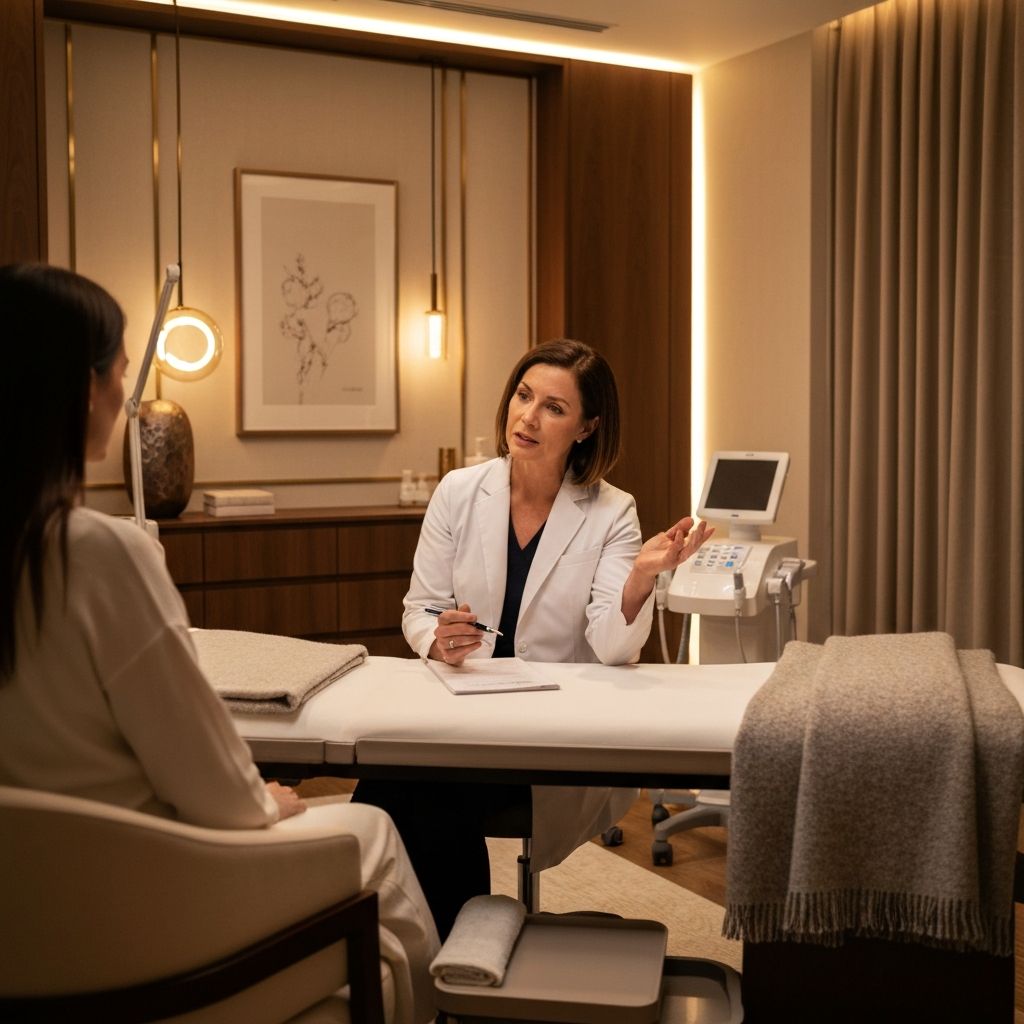
Informed consent means the client understands the treatment, its realistic benefits and risks, alternatives, aftercare and costs — and agrees voluntarily. A signed form documents that conversation; it doesn't replace it. For treatments with meaningful risk, thorough consent is essential. • Explain the procedure in plain language. • Cover realistic outcomes (never guaranteed) and possible complications. • Screen for contraindications and record the screening. • Give the client time to ask questions and decline.
Treatment documentation
Keep a clear record for each visit: assessment, consent, products/parameters used, areas treated, batch/lot numbers where relevant, aftercare given, and any adverse events. Good records support continuity of care and are expected by insurers and, for regulated professionals, by their college.
Photography and privacy
Clinical photos are valuable but sensitive. Obtain separate, specific consent for photography and for any marketing use, store images securely, and respect a client's right to decline. Health information is personal and must be handled with appropriate privacy safeguards; when in doubt, seek advice on your obligations. Comparison — Consent form — Keep it because: Documents informed agreement. Treatment notes — Keep it because: Continuity + accountability. Product/lot records — Keep it because: Traceability if a batch issue arises. Photo consent — Keep it because: Separate permission for images/marketing. Adverse-event notes — Keep it because: Safety follow-up and learning.
Advertising ties back to consent
If you use client photos or stories in marketing, remember advertising rules — especially for prescription treatments — and college testimonial standards. See our guide to advertising rules for injectables and building a portfolio ethically.
Learn it as part of real training
Turning documentation into a simple daily habit
Good records fail most often not from ignorance but from inconsistency — a busy day, a skipped note, a missing consent. The fix is to make documentation frictionless: use standard forms, complete them at the point of care rather than 'later,' and store everything securely in one system. When the right thing is also the easy thing, it actually happens on every client, every time. • Use consistent consent and treatment-note templates for every service. • Complete records at the time of treatment, not from memory afterward. • Store consent, notes, product/lot details and photos together, securely. • Get separate, specific consent for any photography or marketing use. The payoff shows up exactly when you need it: if a treatment is ever questioned, thorough contemporaneous records are your strongest evidence that care was appropriate and consented. They also support continuity of care and satisfy insurers and, for regulated professionals, college standards. Build the habit from your very first client and it becomes invisible. Documentation isn't an afterthought — it's part of professional practice taught in comprehensive programs like Ziba's Aesthetic Diploma and Medical Aesthetician certificate. Build these habits early and they'll protect you for your whole career. This article is general information, not legal advice — confirm your specific obligations.
Ziba Aesthetics Training Institute
Ziba Aesthetics Training Institute is located at 7191 Yonge St, Unit 701, Markham, ON, serving the Greater Toronto Area. To learn more about the Aesthetic Diploma program or discuss your goals, book a consultation or start your application with our admissions team.
Frequently Asked Questions
More Mezogel Booster Articles
Continue learning about Mezogel Booster treatments and training
- Mezogel Booster Treatment in Toronto: Complete Guide
8 min read
- Mezogel Booster Training and Certification in Ontario
7 min read
- Mezogel vs Profhilo: Comparing Skin Booster Treatments
9 min read
- 10 Benefits of Mezogel Booster for Skin Rejuvenation
10 min read
- How to Perform Mezogel Booster: Injection Techniques Guide
11 min read
- Mezogel Booster Side Effects and Safety: Complete Guide
10 min read
More Laser Training Articles
Continue learning about laser training, certification, and aesthetic careers
- Laser Technician Certification in Ontario: Requirements and Training
9 min read
- Advanced Laser Training for Experienced Technicians
7 min read
- Laser Training in Thornhill: Complete Certification Guide
12 min read
- Laser Hair Removal Training in Thornhill: Get Certified
11 min read
- Laser Skin Rejuvenation Training in Thornhill
11 min read
- Best Laser Training Center in Thornhill and Toronto
11 min read
Related Programs
External Resources
- O. Reg. 136/18: Personal Service Settings (under the Health Protection and Promotion Act) — CanLII
Governs infection-prevention standards for personal service settings (aesthetics, electrolysis, nails, tattooing); enforced by local public health units. Verified. Source: https://www.canlii.org/en/on/laws/regu/o-reg-136-18/latest/o-reg-136-18.html
- Scope of Practice — practice standard, College of Nurses of Ontario
CNO practice standard on controlled acts, orders and authorizing mechanisms for nurses. Verified. Source: https://cno.org/Assets/CNO/Documents/Standard-and-Learning/Practice-Standards/49041-scope-of-practice.pdf