Chemical Peel Depths Explained: Superficial vs Medium vs Deep
Not all chemical peels are equal. Here's how peel depths differ, what they treat, their risks, and how depth affects who can perform them.
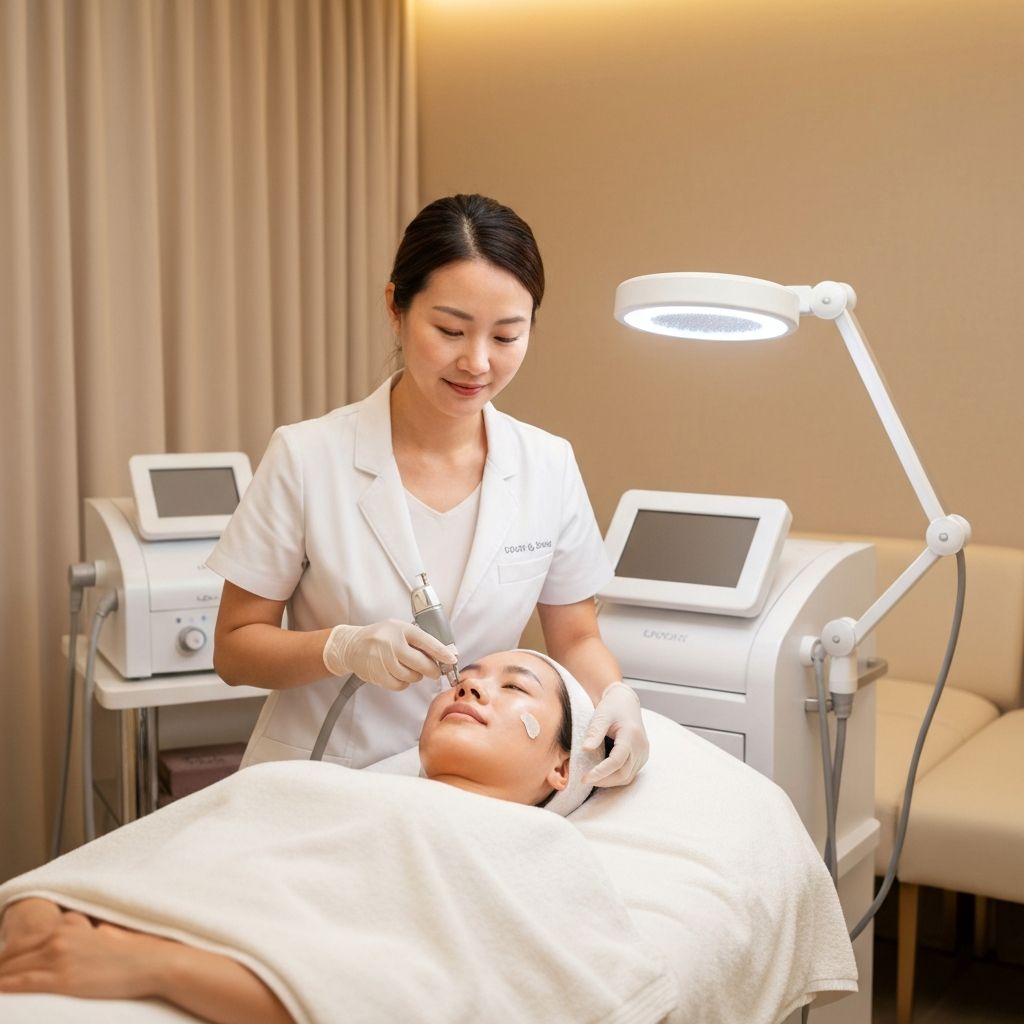
The key concept: Peels are classified by how deeply they work — superficial (epidermis), medium (into the upper dermis), and deep (further into the dermis). Deeper peels can do more but carry more risk and downtime, and depth affects who can safely and lawfully perform them. This is educational information, not a treatment protocol — learn peels under proper training.
How peels work
A chemical peel applies a solution that controllably exfoliates skin, prompting renewal. The active, concentration, pH and contact time determine depth. Deeper isn't automatically better — the right depth depends on the concern, the skin, and the practitioner's scope.
The three depth categories
Comparison — Superficial — Reaches: Epidermis; Commonly addresses: Dullness, mild texture, maintenance; Downtime/risk: Minimal. Medium — Reaches: Upper dermis; Commonly addresses: Pigmentation, fine lines, moderate texture; Downtime/risk: Moderate. Deep — Reaches: Deeper dermis; Commonly addresses: Deeper wrinkles, significant damage; Downtime/risk: Significant; higher risk.
Depth, risk and skin type
Deeper peels carry greater risk of complications such as prolonged redness, scarring and pigment changes — risks that are higher in deeper Fitzpatrick skin types. Careful assessment, conservative choices and appropriate pre/post care are essential.
Who can perform peels in Ontario?
This is where depth meets scope. Lighter, superficial peels are commonly within the practice of trained estheticians and medical aestheticians. As peels get deeper and more medical, they move toward regulated professionals and medical oversight, and the risk profile rises. Where a peel sits on this spectrum affects who should perform it — confirm scope for the specific peels you plan to offer, and see our overview of controlled acts.
Building peel skills safely
Matching peel choice to the client in front of you
Choosing a peel isn't about reaching for the strongest option — it's about matching depth to the client's concern, skin type, downtime tolerance and your own scope. A superficial peel may be ideal for a client wanting a low-downtime refresh, while deeper concerns in a suitable candidate might warrant a medium peel performed by an appropriately qualified provider. The right answer balances the desired result against risk and practicality. • Start from the client's concern and realistic downtime tolerance. • Weigh skin type and pigmentation risk before increasing depth. • Confirm the peel sits within your scope and training. • Prioritize pre-treatment prep and diligent aftercare. Pre- and post-care often matter as much as the peel itself, particularly for reducing the risk of post-inflammatory pigmentation in higher skin types. Setting honest expectations — including downtime and the likelihood of needing a series rather than a single dramatic result — is part of delivering peels responsibly. Because outcomes and risks hinge on judgment, hands-on training matters. Ziba's Medical Aesthetician certificate and Skin Care course cover facials, peels and treatment planning within professional practice, and the comprehensive Aesthetic Diploma integrates them with broader skills. Learn peels under supervision before offering them.
Ziba Aesthetics Training Institute
Ziba Aesthetics Training Institute is located at 7191 Yonge St, Unit 701, Markham, ON, serving the Greater Toronto Area. To learn more about the Medical Aesthetician program or discuss your goals, book a consultation or start your application with our admissions team.
Frequently Asked Questions
More Mezogel Booster Articles
Continue learning about Mezogel Booster treatments and training
- Mezogel Booster Treatment in Toronto: Complete Guide
8 min read
- Mezogel Booster Training and Certification in Ontario
7 min read
- Mezogel vs Profhilo: Comparing Skin Booster Treatments
9 min read
- 10 Benefits of Mezogel Booster for Skin Rejuvenation
10 min read
- How to Perform Mezogel Booster: Injection Techniques Guide
11 min read
- Mezogel Booster Side Effects and Safety: Complete Guide
10 min read
More Laser Training Articles
Continue learning about laser training, certification, and aesthetic careers
- Laser Technician Certification in Ontario: Requirements and Training
9 min read
- Advanced Laser Training for Experienced Technicians
7 min read
- Laser Training in Thornhill: Complete Certification Guide
12 min read
- Laser Hair Removal Training in Thornhill: Get Certified
11 min read
- Laser Skin Rejuvenation Training in Thornhill
11 min read
- Best Laser Training Center in Thornhill and Toronto
11 min read
Related Programs
External Resources
- Regulated Health Professions Act, 1991 (RHPA), s.27 controlled acts — Ontario e-Laws
Establishes that 'administering a substance by injection or inhalation' is a controlled act. Canonical e-Laws page (content is JavaScript-rendered; corroborated by multiple regulator summaries). Source: https://www.ontario.ca/laws/statute/91r18
- O. Reg. 136/18: Personal Service Settings (under the Health Protection and Promotion Act) — CanLII
Governs infection-prevention standards for personal service settings (aesthetics, electrolysis, nails, tattooing); enforced by local public health units. Verified. Source: https://www.canlii.org/en/on/laws/regu/o-reg-136-18/latest/o-reg-136-18.html